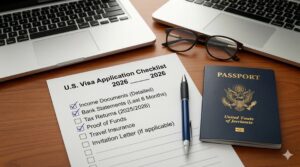
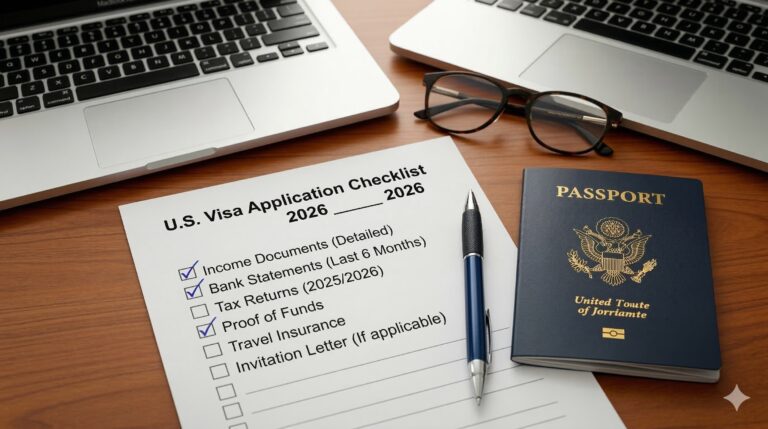
Income Documents for US Visa: Complete Checklist for Approval in 2026

Planning to travel to the United States in 2026? Whether it’s for tourism, business meetings, or visiting family, one thing can make or break your application: your income documents for US visa approval.
Every year, thousands of UK applicants are refused under Section 214(b) — often due to insufficient financial evidence or weak proof of ties to the UK. The good news? Most refusals are preventable with proper preparation.
In this comprehensive guide, we’ll walk through exactly what financial documents you need, how much money is considered “enough,” and how to present your case confidently at the US Embassy in London.
When applying for a B1/B2 visa, the visa officer’s primary concern is simple:
“Will this applicant return to the UK after their temporary stay?”
Your income documents for US visa help demonstrate:
Without convincing supporting evidence, even frequent travellers may face refusal.
There is no official minimum salary requirement published. However, the assessment typically considers:
For a US tourist visa from the UK in 2026, applicants typically provide 3–6 months of bank statements, recent payslips, and proof of employment or self-employment. There is no fixed minimum bank balance, but funds should clearly cover travel expenses and demonstrate financial stability.
Here’s what most UK applicants should prepare:
If employed:
A strong employer letter significantly reinforces ties to the UK.
Most applicants provide:
| Applicant Type | Recommended Months | Notes |
|---|---|---|
| Employed | 3–6 months | Show salary deposits |
| Self-employed | 6 months | Demonstrate steady income |
| Sponsored | 3 months (sponsor) | Include sponsor proof |
Avoid sudden large unexplained deposits.
Useful documents include:
These documents strengthen your financial evidence for US visa review.
Self-employed applicants face higher scrutiny.
You should include:
Demonstrating stable revenue over time is key.
Can you use a sponsor for US tourist visa UK applications?
Yes — but carefully.
Sponsors must provide:
However, remember:
Sponsorship does not replace proof of ties to the UK.
There is no fixed figure. But consider this rule:
Your available funds should comfortably cover:
| Expense Category | Estimated Cost (GBP) |
|---|---|
| Flights | £500–£900 |
| Accommodation | £1,200–£2,000 |
| Food & Transport | £700–£1,000 |
| Insurance | £50–£120 |
| Total | £2,450–£4,000 |
Your bank balance should logically support your declared travel plan.
| Feature | ESTA | B1/B2 Visa |
|---|---|---|
| Duration | 90 days | Up to 6 months |
| Interview | No | Yes |
| Financial documents | Minimal | Required |
| Refusal impact | Limited | Recorded |
If you’re unsure whether ESTA vs B2 visa suits your case, consider your travel history and previous refusals.
Many refusals happen due to:
Visa officers assess credibility as much as documents.
Bring:
Even if not requested, having complete income documents for US visa review shows preparation.
Start at least:
Preparation reduces stress — and refusal risk.
A London-based contractor applied with:
Result? Refusal.
On reapplication with 6 months documentation and structured financial evidence, approval followed.
Preparation makes the difference.
Ask yourself:
Would a visa officer believe I’m financially stable and returning home?
To maximise approval chances:
Thousands of UK travellers succeed each year — those who prepare strategically.
If your interview is approaching, review your documents today. Small adjustments can make a significant difference.
Applicants typically provide 3–6 months of bank statements, recent payslips, tax returns (if applicable), and an employment letter. Self-employed applicants should include SA302 forms and business records. These documents demonstrate financial stability and ties to the UK.
There is no official minimum. However, your balance should comfortably cover your travel expenses (usually £2,500–£4,000 for two weeks) while reflecting stable income and savings history.
Yes, but sponsorship does not replace proof of ties to the UK. You must still demonstrate employment, residence, and financial stability independently.
Most applicants provide 3–6 months. Self-employed applicants are advised to provide at least 6 months to show consistent income patterns.
Ensure strong financial documentation, stable employment proof, clear travel purpose, and evidence of ties to the UK. Avoid inconsistencies in your financial evidence and DS-160 form.
Final Note:
Your income documents for US visa are more than paperwork — they tell your financial story. Make sure it’s clear, consistent, and credible.