
How to Secure a Premium Travel Credit Card High Limit UK and Maximise Your Air Miles

Have you ever wondered how to get a premium credit card with a high limit quickly and efficiently? If the answer is yes, you’re in the right place. In this complete guide, I’ll share practical strategies that can help improve your chances of being approved for a premium card with a higher limit within 30 days.
Access to more exclusive financial products is no longer reserved for the ultra-wealthy. With the right preparation and a strong application, you can work towards a premium card and enjoy benefits such as airport lounge access, enhanced rewards, and more tailored customer support.
Why is this guide different? Because we go beyond the basics. You’ll learn specific tactics—from when to apply to how to negotiate a higher credit limit after approval.
A premium credit card sits at the top end of credit products. Unlike standard cards, these are aimed at customers with a stronger financial profile and often include benefits that can justify a higher annual fee.
In the UK, credit is widely used in everyday life. The Financial Conduct Authority (FCA) reports that 84% of UK adults (45.7 million people) held at least one credit or loan product in the previous 12 months. This highlights how mainstream credit products are—though eligibility and pricing vary significantly by personal circumstances.
Key Benefits of a Premium Credit Card
Premium benefits go far beyond a higher credit limit. Here are the main differentiators:
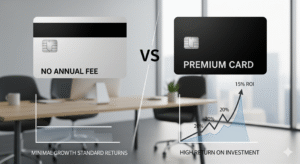
| Feature | Standard Card | Cartão Premium |
| Starting Credit Limit | Typically lower (set by lender affordability checks) | Often higher (still subject to affordability and risk) |
| Annual Fee | Often £0 | Often fee-based (sometimes waived with spend) |
| Rewards | Basic points/cashback | Higher rewards and broader perks |
| Airport Lounges | Usually not included | Often included (may be capped or conditional) |
| Concierge | Usually not available | Often available (varies by provider) |
| Travel Insurance | Sometimes none | Often included or discounted (terms apply) |
The biggest difference is the customer profile each product is designed for. Standard cards focus on broad access; premium cards typically prioritise perks and service—while still being underpinned by affordability and credit risk assessment.
To get a premium credit card with a high limit, you generally need to meet stricter criteria than for mainstream products. UK lenders typically assess affordability, income stability, existing credit commitments, and overall credit history.
In the UK, there isn’t a single “national score” used across all lenders in the same way for every application. Instead, lenders use credit reference agency data and their own internal scoring and affordability models.
What matters most in practice:
The FCA also highlights that some consumers use credit as a lifeline rather than a tool—and that 5% (2.8 million) had persistent credit card debt, meaning they paid more in interest and charges than they paid off. Keeping balances under control can support a stronger lending profile over time.
Premium products commonly target customers with higher incomes, but minimum income rules vary by provider and card type—and many issuers focus more on affordability than a headline income threshold.
For context on household income levels, the ONS reports that median household disposable income was £36,700 (equivalised) in the financial year ending 2025. Individual circumstances vary widely, and lenders will look at your income and outgoings together.
Commonly accepted ways to evidence income in the UK:
A strong relationship with your bank can help in some cases, especially when applying via an existing provider. Factors that can strengthen your overall profile include:
A practical approach is to keep your finances stable and well-documented for 3–6 months before applying, particularly if you’re targeting a higher-limit product.
Mastering how to get a premium credit card with a high limit quickly comes down to improving application quality and reducing avoidable red flags.
Well-prepared documentation can reduce back-and-forth and speed up verification. Prepare a complete pack:
Core documents:
Helpful extras (where relevant):
Pro tip: Keep scans clear and organised as PDFs. Create a folder named “Premium Card Application – [Your Name]” to make submission easier.
Rather than relying on “magic hours”, focus on practical timing:
Your best channel depends on whether you already have a relationship with the provider:
This timeline maximises your chances of getting a premium high-limit credit card within a month:
Days 1–2: Profile review
Days 3–4: Document organisation
Days 5–7: Strengthen stability
Days 8–9: Choose the right provider
Days 10–12: Apply
Days 13–14: Early follow-up
Days 15–21: Underwriting
Days 22–28: Final checks
Days 29–30: Receipt and activation
Avoiding common mistakes is crucial to getting a premium high-limit credit card:
Mistake #1: Applying for a product that doesn’t match your affordability
If the card’s typical customer profile is far above your current affordability, rejection is more likely.
Mistake #2: Multiple applications in a short period
Too many hard searches can temporarily weaken your profile.
Mistake #3: Incomplete documentation
Missing proof of address or income can delay or derail the application.
Mistake #4: Inconsistent information
Conflicting addresses, income figures, or employment details raise red flags.
Mistake #5: High utilisation and revolving balances
Keeping balances high relative to your limits can reduce approval odds and limit size.
After initial approval, you may be able to request a higher limit.
Negotiation strategies:
Best times to ask:
Some premium benefits can provide strong value if you actually use them:
| Benefit | Approximate Value/Year (example, £) | Minimum Use to Break Even (rule of thumb) |
| Airport lounge access | £80–£300/yr (e.g., 2–8 visits × £20–£40) | Break-even depends on frequency: ~4–8 visits/year (if you would pay per visit) |
| Travel insurance | £60–£250/yr (equivalente a uma apólice anual) | It’s generally “valid” with 1+ trips/year, if the policy covers it (age, conditions, destination, excess). |
| Enhanced rewards | £50–£600/yr (depende de gasto e taxa de earn) | Break-even depends on spending: e.g., £500–£2,000/month in eligible spending (varies greatly by card). |
| Concierge | £0–£200/yr (se você realmente usa) | It only counts if you actually use it (reservations, events, assistance). |
| Premium cashback | £30–£400/yr (depende de categorias e “spend mix”) | It depends on the mix: e.g., £3,000–£20,000/year spent on bonus categories. |
*Values are examples and vary by issuer, eligibility, terms, and spending patterns.
*Benefits such as insurance and lounge access have rules/exclusions; read the card policy before relying on them.
To get the most out of your premium card:
Without naming brands, premium cards in the UK typically fall into patterns:
High-street banks:
International issuers:
Digital-first providers:
Evaluate:
There isn’t one universal UK score. Providers use credit reference data plus their own affordability and risk models. In general, a clean payment history and manageable existing commitments matter most.
Yes—provided you can evidence income (for example via tax documentation and bank statements) and you meet affordability checks.
Timelines vary by provider and by how quickly verification is completed. Some applications are decided quickly; others can take longer if additional checks or documents are needed.
Many providers require income verification or will assess affordability based on available information. Requirements vary.
Yes, but each application may involve a credit check and should be spaced sensibly to avoid unnecessary impacts.
Wait a period, reduce utilisation, correct any report errors, strengthen affordability, and reapply only when your profile has improved.
Many do, but some offer fee waivers based on annual spend or banking relationship.
A higher limit is just the amount of credit available. “Premium” usually means added benefits, service, and rewards—alongside eligibility and affordability checks.
Getting a premium credit card with a high limit within 30 days is possible with a structured approach. The key is preparation, complete documentation, and choosing a provider whose product matches your financial profile.
Remember: a premium card is more than status—it can unlock benefits that deliver real value when used intentionally. Focus on responsible use, understand the fees and terms, and make sure the perks match your lifestyle.
Next step: Start Week 1 today. Check your credit report(s), organise your documentation, and shortlist the premium card that best fits your spending patterns.
Official/Governmental Sources
Financial Conduct Authority (FCA) — consumer credit prevalence and persistent credit card debt:
FCA – The evolution of consumer credit: What the next decade holds
Office for National Statistics (ONS) — median household disposable income
Average household income, UK: financial year ending 2025 — ONS